Why Do We Delete the Photos Where We Actually Look Happy?
Somewhere between the moment and the memory, something goes wrong.
You're at a backyard cookout, or a dive bar, or just sprawled on someone's couch on a Saturday afternoon. You're not performing anything. You're just there — laughing too loud at something dumb, sauce on your shirt, hair doing whatever it wants. Someone snaps a photo. And for one half-second, before you see it, you feel genuinely good.
Then you look at the screen. And you delete it.
Not because you look terrible. Sometimes it's actually the opposite. You delete it because you look real — and real, apparently, is the scariest thing you can be.
The Curated Self vs. The Actual Self
We've spent years building a version of ourselves for public consumption. It's not fake, exactly — it's more like a highlight reel with a very specific aesthetic. Good light. Flattering angles. Expressions that communicate something intentional: confidence, contentment, low-key fun. We've gotten good at it.
The candid photo breaks all of those rules at once.
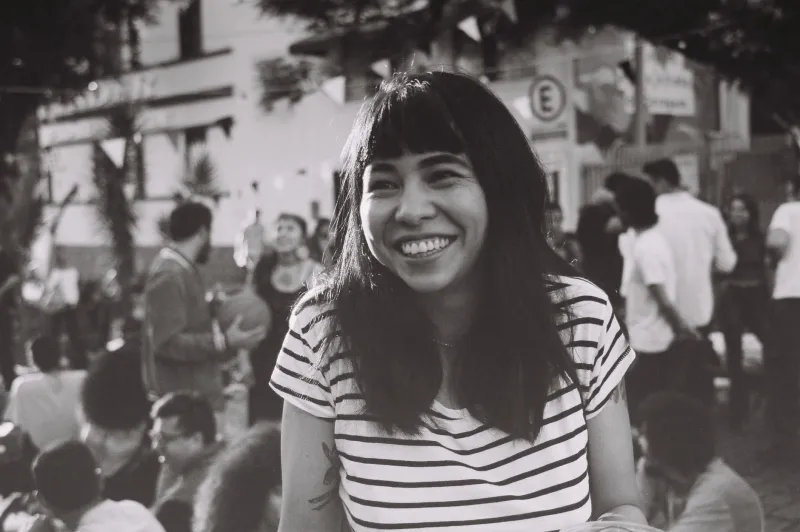
Your mouth is open in a way that you'd never consciously allow. Your laugh has taken over your whole face — not the cute, controlled smile you've practiced, but the real one, the one that scrunches your nose and shows too many teeth and makes you look like you completely forgot anyone was watching. Which, of course, is exactly what happened.
That's the version of you that got captured. And that's the one you can't stand to post.
There's a word for this that therapists use: vulnerability hangover. It's that queasy feeling after you've let people see something unfiltered about yourself — said too much at dinner, cried in front of a coworker, posted something honest at midnight. The candid photo triggers a version of it before you've even shared anything. You see your own unguarded face and preemptively flinch.
What We're Actually Afraid Of
Here's the thing worth sitting with: what exactly is the fear?
It's not vanity. Well — it's not only vanity. You might tell yourself you're deleting it because you don't like how you look. But plenty of people who delete those photos are objectively, undeniably glowing in them. The fear runs deeper than that.
Part of it is about ownership. When you post a photo you've chosen, you're controlling the narrative. You decided what to share and what it means. The candid photo feels like it was taken from you — a piece of you that got caught before you could shape it into something presentable. Sharing it feels like giving up authorship of your own story.
Part of it is about happiness specifically. Joy, it turns out, is one of the most vulnerable emotions there is. Sadness and frustration are almost easier to share — they invite sympathy, they signal depth. But happiness? Happiness is exposed. It says: this is something I want. This matters to me. This is a moment I was hoping for. And that feels like handing someone a map to everything that could hurt you.
If you post the photo where you're genuinely beaming, you're telling the world: I care about this. This made me happy. And then what if they don't get it? What if no one responds? What if they scroll right past the most real you've looked in months?
The Ones That Make It Through
Think about the photos you do post. The ones that make the cut.
There's a certain kind of performative ease that's become its own genre — the candid-that-isn't, the effortless-that-took-twenty-tries. You've seen it on every platform. The laughing-while-looking-away shot. The mid-sip coffee photo. The I-didn't-know-you-were-taking-this that required four retakes. It's not dishonest, exactly. But it's managed. It's joy that's been made safe for public consumption.
The photo you deleted was different. It was unmanaged. And that's the one that actually showed something.
There's real irony here, because those are also the photos that other people tend to love most when they do get shared. You've probably had the experience of seeing a friend post something raw and unposed — a genuine, goofy, unguarded moment — and feeling a rush of warmth toward them. Something in you recognizes it. That's who they actually are. And you like them more for it.
We know this. We've felt it on the receiving end. And we still delete our own versions.
The Quiet Grief of the Deleted Folder
Somewhere in the digital void is an archive of your best moments — the ones you actually lived, the ones where you were fully present and completely yourself. You'll never see them again. You decided they weren't fit for public record, which over time starts to feel like deciding that you weren't fit for public record.
That's worth noticing.
Not every photo needs to be shared. That's genuinely true. But there's a difference between choosing privacy because something feels sacred and deleting something because you're afraid of what it reveals. One is a boundary. The other is a kind of self-erasure.
The photo where your face is doing the ugly-happy thing — the one where you're clearly, messily, unambiguously having a good time — that's not a flaw in the image. That's the whole point of the image.
Maybe Try Keeping It
You don't have to post it. That's not the ask here.
But maybe don't delete it either. Maybe let it sit in your camera roll for a while — just for you, not for anyone's feed. Let it be evidence that you were somewhere, that you felt something, that you were the kind of person who could laugh that hard at a random Tuesday afternoon.
Because here's the quiet truth underneath all of it: the moments we're most ashamed to document are usually the moments we were most fully alive. The unguarded ones. The ones where joy snuck up on us and took over before we could rein it in.
That's not something to delete.
That's the whole slice of it.