The One You Erased Before Anyone Could See It Was Probably the Most You
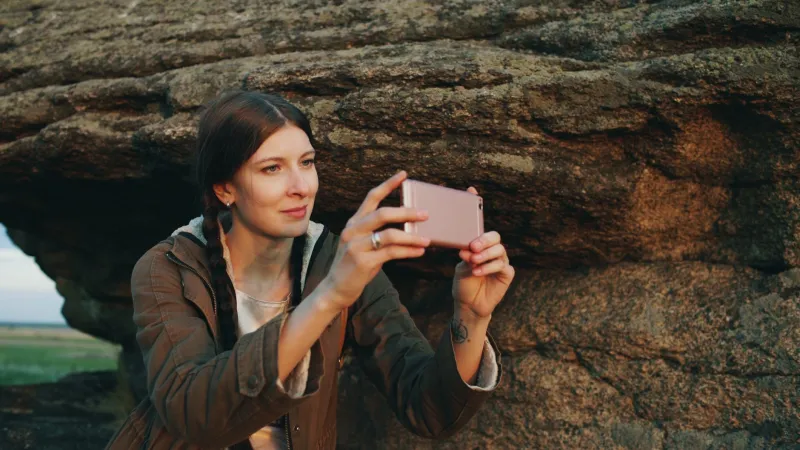
It takes maybe three seconds. You lift your phone, tap the shutter, and then — before the image has fully rendered — your thumb is already drifting toward the trash icon. Gone. You didn't even really look at it. You felt it was wrong and moved on.
We do this dozens of times a week without thinking about it. A selfie with the wrong light. A group shot where you happened to blink. A photo of your lunch that somehow made the food look worse than it tasted. Delete, delete, delete. The camera roll we actually keep is a highly edited highlight reel. The photos we delete? That's the raw footage of a life.
And the raw footage, it turns out, is where the real story lives.
The Split-Second Judge
There's something almost reflexive about the way we reject certain images. It's not a careful, considered decision. You're not sitting there weighing the pros and cons. You see it, something in your gut clenches, and it's gone before your conscious brain has fully clocked why.
Psychologists would probably point to something called the discrepancy gap — the space between how we imagine we look and how we actually appear. When a photo closes that gap too aggressively, showing us something truer than our internal self-image, we experience it almost like a small threat. The delete button is how we restore order.
But here's the thing: that gap is exactly where your actual life is happening.
The photo where your eyes are half-closed because you were genuinely mid-laugh? That was a real moment. The one where your arms looked bigger than you wanted, taken at your nephew's birthday party while you were helping him blow out the candles? That was you, fully present, not performing anything for anyone. The shot of your living room with the throw blanket bunched up wrong and a coffee mug on the floor — that's what your home actually looks like on a Tuesday.
None of it made the cut. All of it was true.
What Stays vs. What Goes
Think about the photos you do keep. There's usually a logic to them that has very little to do with capturing a moment and everything to do with crafting a version of yourself you're comfortable presenting. Good light, flattering angle, background reasonably tidy. You look like the person you're trying to be, or at least the person you want others to think you are.
That's not vanity, exactly. It's more like... ongoing personal branding. We all do it. Social media has just made the process more visible and more constant.
But the deleted photos operate by a completely different logic. They weren't curated. They just happened. The messy kitchen in the background wasn't a choice — it was a Tuesday. The under-eye circles weren't a statement — you'd been up late helping a friend through something hard. The weird expression on your face wasn't who you are; it's who you were in that exact, unrepeatable instant.
Somewhere in your deleted folder — if your phone even keeps them for the thirty-day grace period before permanent erasure — there's probably a more complete biography of your life than anything you've consciously saved.
The Aesthetics of Erasure
There's also something worth noticing about what specifically triggers the delete. Because it's not random.
For some people, it's body stuff — a stomach, a jawline, the way their arms look in a particular shirt. For others, it's environmental: the cluttered desk, the pile of laundry visible in the corner, the apartment that doesn't look like an Instagram-worthy space. Some people delete photos where they look too happy in a way that feels embarrassing, too emotional, too much. Some delete the ones where they look tired, because tired feels like a confession.
What you delete tells you something specific about what you're most guarded about. It's a little map of your insecurities, drawn in negative space.
That's not a comfortable thing to sit with. But it's useful.
The Friends Who Never Made It to the Feed
Here's a version of this that hits a little differently: the photos of other people that you delete on their behalf.
You take a picture of your best friend mid-sentence, mouth open, eyes half-shut, and you delete it without even showing her — not because the moment wasn't real, but because you know she'd hate it. You take a picture of your dad at Thanksgiving, and he looks old in a way that surprises you, and you delete it because it makes you feel something you're not ready to feel.
Those deletions are an act of protection, sure. But they're also a kind of editing-out of reality. The friend with the unflattering expression was still your friend, still at that dinner, still laughing at whatever you were all laughing at. Your dad is still getting older. The delete button doesn't change any of that. It just keeps those truths out of the archive.
Which means the archive is, by design, a little bit of a lie.
What Would Happen If You Kept One
This isn't a call to post your worst angles or stop caring how you look in photos. That's not really the point. The curation isn't the problem — it's deeply human to want to present yourself thoughtfully.
But there's something worth trying, at least once: keep a photo you would normally delete. Don't post it. Just keep it. Put it somewhere you'll see it occasionally.
Not because it's brave or because you're supposed to love everything about how you look. Just because it's real. Because it was a Tuesday, and you were there, and something actually happened, and the camera caught it.
The photos we curate show the life we're building toward — or at least the version of it we want reflected back at us. The photos we delete show the life we're already living. And that life, with all its bad lighting and genuine expressions and dishes in the sink, is the one that actually belongs to you.
The highlight reel is nice. But the outtakes are where you actually showed up.