Some Things Between You and Your Parent Will Stay Unsaid Forever — And That's Okay
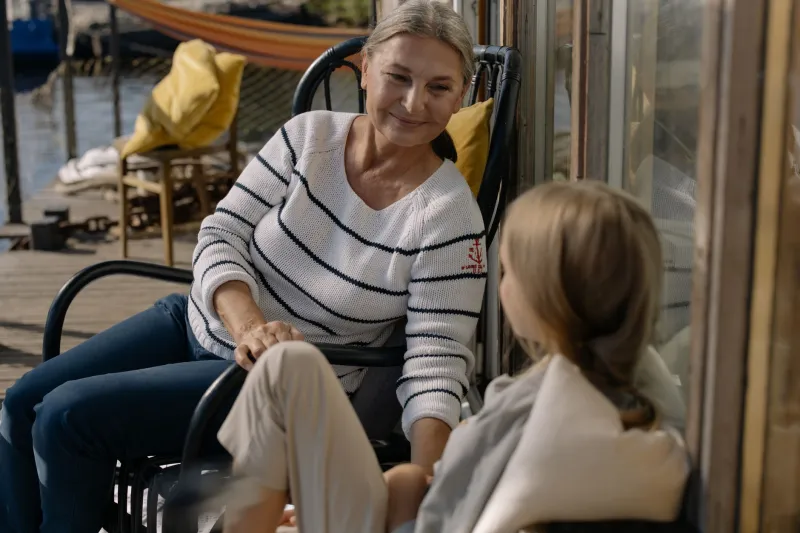
There's a specific kind of silence that lives between adult children and their parents. Not the comfortable kind that settles in during a long car ride, and not the tense kind that follows an argument. This one is different. It's the silence around the questions you've never asked out loud — the ones you've turned over in your mind for years but somehow always managed to swallow before they reached the surface.
Maybe you want to know what your dad was actually like in his twenties, before he became your dad. Maybe you've wondered whether your mom ever seriously considered a life that looked nothing like the one she built. Maybe there's something darker — a family story that floats in half-sentences and redirected conversations, something that happened before you were born or when you were too young to understand.
You've never asked. And at this point, you probably won't.
The Questions That Live in the Gaps
Most of us carry a small catalog of things we don't know about our parents — things we know we don't know, which is its own strange experience. You catch a flicker of something in an old photograph. Your aunt makes a reference at Thanksgiving that your mom shuts down with a look. Your dad goes quiet at a certain song and you file it away, meaning to ask later, and later never quite arrives.
Some of these gaps are trivial. Some feel enormous.
There's a particular kind of adult child — and honestly, it might be most of us — who has spent real mental energy imagining a version of their parent that existed before the role of parent took over. Who was she when she was 24 and broke and figuring it out? What did he actually want his life to look like? Were they happy? Were they scared? Did they ever seriously wonder if they'd made the wrong choices?
These aren't questions you ask at Sunday dinner. They're not even questions that come naturally in the rare one-on-one moments. There's a distance between the person you need them to be and the full, complicated human they actually are — and crossing that distance requires a kind of courage, or maybe a kind of surrender, that most families never quite manage.
Why We Don't Ask
It's not always fear, though fear is definitely part of it. Sometimes the answer feels too risky — what if you ask your mother if she ever regretted having kids so young and she pauses just a half-second too long before she says no? What if you ask your father about that stretch of years he never mentions and the answer changes something you can't un-change?
Sometimes it's protection. You've built a version of your parent that works for you, that fits into the story you've assembled about your own life, and you're not entirely sure you want new information disrupting the architecture.
And sometimes — maybe more often than we admit — it's just that the opportunity never quite materializes. Real, deep conversations require a specific kind of window: the right amount of time, the right emotional weather, the right absence of distraction. Families are busy. Parents deflect. Adult children have their own lives pulling at them from every direction. The window opens and closes and you were in another room when it did.
The Quiet Decision to Let It Go
At some point, something shifts. It's not dramatic. There's no single moment of resolution. But somewhere along the way, you start to realize that the conversation you've been half-waiting for probably isn't coming — and you begin, slowly, to make peace with that.
This is harder than it sounds, and also somehow easier than you'd expect.
Harder, because letting go of the questions means accepting that you will never fully know this person you've known your whole life. There's grief in that. Your parent is going to die someday — or maybe already has — and certain things will go with them, sealed up permanently, and you will have to live with the outline of a story you never got to read in full.
Easier, because the alternative — holding onto the hope of a conversation that requires both of you to show up in ways neither of you has quite managed — is its own kind of exhausting. Waiting for a door to open keeps you standing in the hallway. At some point you have to go live in the rest of the house.
Knowing Someone Without Knowing Everything
Here's the thing nobody really prepares you for: you can love someone deeply and completely while simultaneously knowing that you don't fully know them. These two things are not in conflict. They just feel like they should be.
Your parent is a whole person who existed before you arrived and who contains multitudes you haven't been granted access to. That's true of every human relationship, honestly — but it hits differently with the people who raised you, the ones you assumed you had a complete picture of simply because they've always been there.
What you have instead of the full story is something else: a texture. The way your mom always overcooks pasta but makes the sauce from scratch anyway. The specific look your dad gets when he's proud of something but doesn't know how to say it. The small rituals, the recurring jokes, the particular way they answer the phone when they see it's you calling.
That's not nothing. That's actually a lot.
The Stories That Stay Untold
Accepting that some things will remain unsaid isn't giving up on the relationship. It's recognizing the relationship for what it actually is rather than what you imagined it might one day become.
There are families who have those conversations — the long, excavating ones where everyone finally says the true thing and old photographs come out and tears happen and something gets healed. Those families exist. That's genuinely beautiful when it happens.
But there are also families where the love is real and the closeness is real and the unsaid things just stay unsaid, tucked into the walls of a relationship that still holds. Where you know your parent well enough to love them and not quite well enough to fully understand them, and you've learned — slowly, imperfectly — to find the grace in that.
You're not owed every chapter of someone else's story, even if that someone made you who you are.
Some doors don't open. And eventually, you stop standing at them — not because you've stopped caring, but because you've finally, quietly, started to understand that the love was never waiting behind the door in the first place. It was already here, in everything that was said and shared and shown, in the imperfect, incomplete, genuinely beautiful relationship you actually have.
That's the whole story. Even without the parts you'll never know.