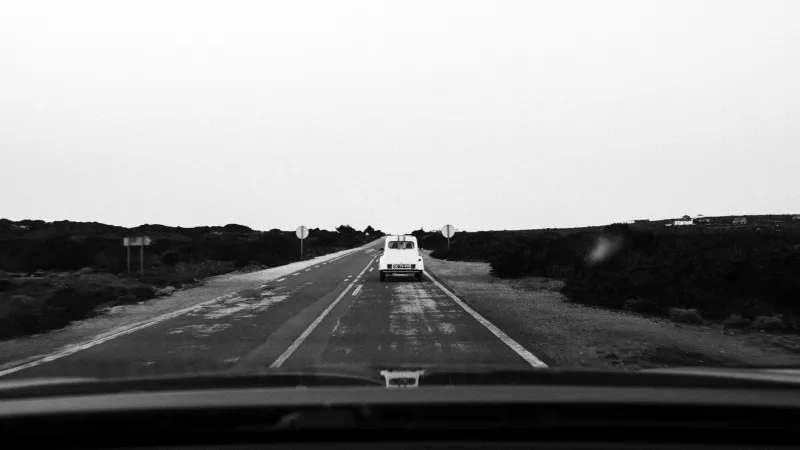
Your Most Honest Conversations Are Happening Alone in a Moving Car
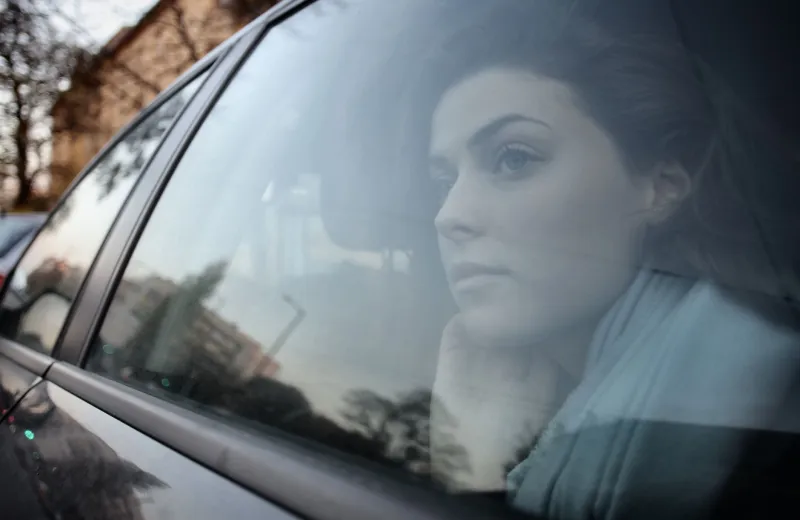
It usually starts around the third traffic light.
You've left the restaurant, the family gathering, the work happy hour — whatever social situation required you to be a slightly polished version of yourself — and now you're alone, seatbelt clicked, radio not quite loud enough to drown out your own thoughts. And then it begins. The real conversation. The one where you finally say what you actually meant.
You replay what your coworker said and tell her off, eloquently, into the steering wheel. You rehearse the thing you need to say to your partner — the version that's honest but not cruel, direct but not cold. You make a decision you've been circling for a month and feel, briefly, completely certain about it. By the time you pull into your driveway, you've had an entire reckoning with yourself.
And then you walk inside and say, "Traffic was rough. What's for dinner?"
The Audience Problem
Here's something worth sitting with: most of us are fundamentally different people when no one is watching. Not in a duplicitous way — more in a pressure-valve kind of way. When we're in conversation with others, we're doing a dozen things at once. We're monitoring reactions, softening edges, choosing words that won't land wrong, managing the other person's feelings alongside our own. It's exhausting in a way we rarely acknowledge, because it's just what conversation is.
But alone in a moving car? The audience disappears. There's no one to disappoint, no facial expression to read, no awkward silence to fill. The only person you have to be honest with is yourself, and it turns out that's actually a much lower-stakes situation than it sounds. You already know your worst qualities. You're not going to be shocked.
So you stop performing. And the truth kind of just... spills out.
Psychologists sometimes call this self-disclosure — the process of revealing genuine thoughts and feelings — and research consistently shows we do it more freely when we feel safe from judgment. The car creates a weird little pocket of psychological safety. You're in motion, which gives the brain something to do besides panic. You're enclosed, which feels private. And you're alone, which means the only judgment you're risking is your own.
Why Motion Helps You Think
There's also something about moving that loosens the mind. Runners know this. People who pace while they're on the phone know this. Something about forward physical momentum seems to unlock a kind of mental momentum — thoughts that were stuck start moving too.
Neuroscientists have noted that activities requiring moderate, repetitive physical engagement (driving a familiar route, taking a walk, standing in the shower) tend to free up cognitive resources for what's called default mode network activity. That's the brain's background processing system — the one responsible for self-reflection, daydreaming, and working through unresolved problems. Basically, your brain does its most honest thinking when the rest of you is occupied with something simple.
Which explains why your best ideas come in the shower. Why you solve problems on your morning walk. Why the 20-minute commute home sometimes feels like the most productive part of your day, even though you weren't technically doing anything.
You were processing. You were catching up to yourself.
The Gap Between the Dinner Table and the Driveway
What's a little unsettling — and worth being honest about — is how wide that gap can get. The distance between what you said at dinner and what you said to yourself on the way home.
Maybe at dinner you said everything was fine when it wasn't. Maybe you laughed along with something that bothered you. Maybe you deferred on a decision that mattered to you, and then spent the entire drive home arguing the other side of it with nobody. The car version of you knew exactly what you thought. The dinner version of you decided it wasn't worth the friction.
Sometimes that's just social grace. We can't narrate every internal reaction in real time — that's not conversation, that's chaos. A little filtering is how we function together.
But sometimes the gap is bigger than social grace. Sometimes the car version of you is trying to flag something that the dinner version of you keeps ignoring. The relationship that's been quietly wrong for a while. The job that's draining something essential out of you. The friendship that stopped feeling reciprocal somewhere along the way. These things don't always surface in conversation because the people involved are in the conversation with you. But they surface on the drive home, reliably, like clockwork.
What To Do With What You Hear
The tricky part is that we tend to leave those car conversations in the car. We arrive home, re-enter the social world, and the thing we figured out or admitted or decided gets filed somewhere in the back of the brain — accessible but unacted on.
If this is a pattern you recognize, it might be worth trying something simple: before you get out of the car, just name the thing. Out loud if you can stand it, or just consciously. I realized I'm angry about what he said. I think I need to bring this up. I don't actually want to go to that thing on Saturday. You don't have to solve it right then. But naming it out loud — even just to yourself — keeps it from evaporating entirely.
Some people keep a voice memo habit for exactly this reason. Not because they're podcasters or particularly organized, but because they've learned to trust the car version of themselves and want a record of what that person figured out. It sounds a little odd until you try it and realize you've been accidentally discarding your own best thinking for years.
The Version of You Nobody Sees
There's something kind of beautiful about the fact that your most unfiltered self shows up when no one's around to witness it. It means that version of you exists. The one who knows what they actually think, who can articulate what they actually feel, who can make a decision without running it through fifteen social filters first.
That person isn't a secret identity or a fantasy version of yourself. They're just you, with the audience removed.
The conversations you have with yourself in the car, in the shower, on the walk around the block — they're not rehearsals for the real thing. In a lot of ways, they are the real thing. The other conversations are just the edited version we share with the world.
Both matter. But maybe one of them deserves a little more credit.