Alone in the Driver's Seat, Finally Telling the Truth
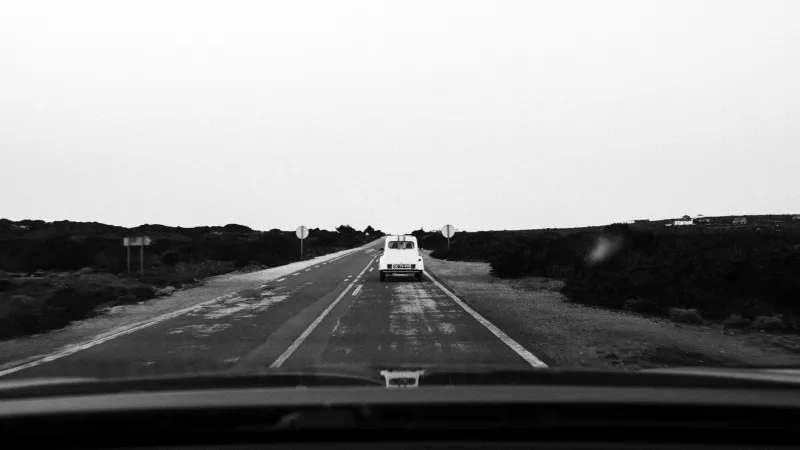
It starts before you even hit the highway. You back out of the driveway, and somewhere between checking your mirrors and adjusting the volume, something unlocks. Maybe it's the white noise of the engine. Maybe it's the fact that nobody's watching. But by the time you're two traffic lights away from home, you're already mid-sentence — talking to no one, or maybe finally talking to yourself.
Welcome to the one space in your life where you're completely off the record.
The Commute Is Not Just a Commute
We spend a lot of time in our cars. According to the U.S. Census Bureau, the average American commute is around 27 minutes each way. That's nearly an hour a day of what we casually call "driving" but what is actually something much stranger and more intimate than that.
Because here's the thing: you're not just getting from point A to point B. You're processing. You're rehearsing. You're grieving, strategizing, confessing, and occasionally delivering the most devastating comeback you'll never actually use. The car is where your unedited self shows up for work.
Think about the last time you had a genuinely unfiltered thought. Not a thought you typed and then deleted. Not a thought you censored because someone was in the room. A real, raw, first-draft thought — the kind that embarrasses you a little even when you're alone. Odds are pretty good it happened in the car.
The Arguments You Win in the Left Lane
Let's be honest about the arguments. Not the ones with other drivers, though those are their own category of theater. The arguments with people who aren't even in the vehicle.
You replay the meeting from this morning and say what you actually meant. You walk back through last Thanksgiving and finally articulate why that comment from your uncle landed so wrong. You run the whole conversation with your boss that you've been too anxious to have — except in this version, you're calm and articulate and you make exactly the right point at exactly the right moment.
In the car, you win. You always win. And there's something genuinely useful in that, even if it never leaves the vehicle.
Psychologists sometimes call this kind of mental rehearsal "self-talk," and it's more functional than it sounds. Working through a difficult conversation out loud — even when you're the only participant — can help you clarify what you actually feel and what you actually want. The car isn't just where you vent. It's where you figure things out.
The Confessions Nobody Asked For
But it's not all argument prep and imaginary victories. Sometimes what happens in the car is softer and more uncomfortable than that.
You admit, out loud, that you've been a bad friend lately. You say "I miss him" about someone you'd never say it to in real life. You confess that you're scared — about the job, the relationship, the direction things are heading — and hearing your own voice say it makes it real in a way that thinking it never does.
There's something about the act of speaking, even to an empty passenger seat, that changes the weight of a feeling. Thoughts can spin in circles indefinitely. Words have edges. They land somewhere.
A lot of people describe their car as the one place they feel completely alone in a way that's actually comfortable. Not lonely — alone. There's no performance required. No one needs anything from you for the next 25 minutes. You can be whoever's actually in there.
Trying on Different Versions of Yourself
Some of what happens in the car is less confession and more experimentation. You try on a version of yourself that's braver, or colder, or funnier. You practice saying "no" like you mean it. You imagine quitting, moving, starting over — not as a plan, but as a feeling you need to taste before you can decide whether it's real.
Sometimes you sing, which is its own kind of trying-on. Nobody performs like they perform in the car. Hands conducting invisible orchestras at red lights. Full emotional commitment to a song you'd claim you barely liked if anyone asked.
There's no irony in the car. That might be the most radical thing about it.
What the Gap Tells You
Here's the part worth sitting with: the distance between who you are in the car and who you are everywhere else is actually data.
If you spend your commute rehearsing a conversation you're terrified to have, that's information about something you need. If you find yourself laughing alone at a thought you'd never share, that's a signal about where your real sense of humor lives. If you cry on the way home from work and then walk through the front door dry-eyed and fine, that's worth noticing.
The car version of you isn't the real you in some mystical sense. But it's a you with fewer filters, and fewer filters usually means more signal.
What are you saying when no one's listening? What arguments are you still carrying? What are you rehearsing, and why haven't you said it yet?
The Ritual We Never Named
Most of us have never called this what it is. It doesn't have a name in our culture the way journaling does, or therapy, or even prayer. It's just "driving." Just the commute. Just background noise in the story of the day.
But if you pay attention to it — really pay attention — it starts to look less like dead time and more like the only time in your day that genuinely belongs to you. No notifications. No one waiting for a response. No version of yourself required except the one that's actually there.
The car isn't a confessional, exactly. There's no absolution at the end. But there's something close to honesty, and in a life full of curated responses and careful edits, honesty — even the kind you only ever say out loud to your steering wheel — is worth something.
Maybe worth more than we give it credit for.