The Empty Chair Nobody Mentions Anymore
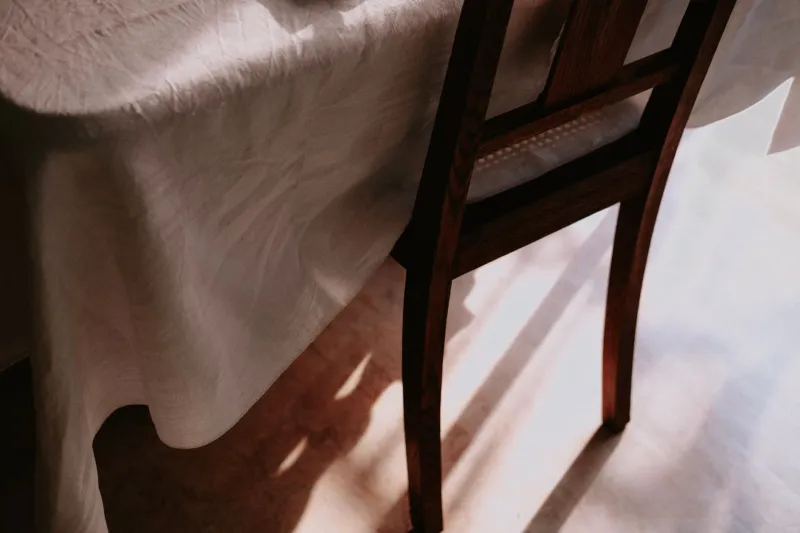
There's a chair at my parents' kitchen table that's been technically available for about six years now. My brother moved to Seattle, took a job that keeps him slammed through most holidays, and somewhere around year two of his absence, we stopped saving him a plate in the way that felt hopeful. Now we just... don't talk about it. Not in a dramatic, swept-under-the-rug way. More like how you stop mentioning a store that closed — it used to be part of the landscape, and now the landscape has quietly adjusted.
That's the thing about family dinner table silence. It doesn't announce itself. It just shows up one Sunday and stays.
When the Conversation Quietly Reorganizes
Families are surprisingly adaptive organisms. When someone removes themselves from the regular rotation — whether through a demanding career, a cross-country move, a falling out, or just the slow drift of adult life — the remaining people don't sit around staring at the gap. They fill it. Conversations shift, new inside jokes form, old ones get quietly retired because they required that person to land properly.
My mom used to tell a story about a road trip we all took to the Outer Banks in 2003. My brother was the punchline. Without him there to groan and add the detail she always gets wrong, she stopped telling it. Not consciously. It just lost its shape.
This is what researchers who study family systems call narrative drift — the way shared stories evolve, shrink, or disappear entirely when the cast of characters changes. The family doesn't decide to forget. Forgetting just becomes the path of least resistance.
The Stories That Get Told vs. The Ones That Don't
Here's where it gets interesting, and maybe a little uncomfortable: the absence of a person doesn't just remove them from current conversations. It starts to quietly edit the past.
When my brother isn't at Thanksgiving, nobody brings up the summer he drove my dad to every single chemo appointment without being asked. Not because we're ungrateful — it's just that the story belongs to him in a way that feels strange to tell without him present. So it sits there, unspoken, and the version of our family that gets constructed around the table is slightly less whole than the real one.
This happens in families everywhere. The sibling who moved away stops being a main character and becomes more of a recurring guest star — beloved, but no longer woven into the daily fabric. The parent who worked nights. The kid who went to college and never really came back, emotionally speaking. Their absence creates a kind of conversational negative space, and the family learns, without ever discussing it, which topics live in that space and which ones are safe to cross.
Invisibility Isn't the Same as Being Forgotten
There's a distinction worth making here, because it matters a lot to the people on the absent side of this equation. Being talked about less isn't the same as being forgotten. Most families carry their missing members in a low, constant hum — the way you think about someone when you see a movie they'd love, or when a song comes on that was playing the last time everyone was together.
But that internal carrying doesn't always translate into presence at the table. And for the person who's away — the one eating dinner alone in a new city, or working a late shift, or estranged by something that felt unresolvable — the silence on their end can feel like erasure, even when it isn't meant that way.
This is one of the lonelier asymmetries of modern family life. The people who stay feel the absence. The person who left feels the distance. And both experiences are real, but they rarely get compared out loud because that conversation requires a kind of vulnerability most families haven't exactly practiced.
What the Gaps Actually Reveal
If you pay attention — and this is the part that requires some honesty — the topics a family stops discussing around an absent member often reveal something true about that person's role when they were present.
Did the humor in the room get quieter? Maybe they were the funny one, and nobody quite fills that space the same way. Did the arguments get more or less frequent? That's information too. Did certain family tensions suddenly relax, or did new ones bubble up to fill the vacuum?
Absence is, in a strange way, a kind of X-ray. It shows you the skeleton of what was actually holding things together — or what was holding things in tension.
In my family, when my brother stopped coming to Christmas, the conversations got more careful. He was the one who'd push back on my dad, ask the questions nobody else wanted to ask, and somehow make it okay for the rest of us to breathe a little. Without him, we got polite in a way that felt both more comfortable and somehow less real.
The Slow Drift Back — and What It Costs
The tricky part is re-entry. When the absent person does show up — for a wedding, a funeral, a rare holiday alignment — there's a version of them that exists in the room and a version of them that exists in everyone's heads, and those two versions have been quietly diverging for years.
The family has moved on in small ways. New references, new dynamics, new shorthand. The returning person steps into a conversation that's been running without them and tries to find the thread. Sometimes it's joyful and seamless. Often it's a little awkward in ways that nobody names out loud.
And sometimes the person who was away realizes, with a quiet jolt, that the family has become fluent in a language they only half-speak anymore.
Setting a Place for the Whole Story
None of this is anyone's fault, exactly. Life scatters people. Work moves us. Choices move us. Sometimes pain moves us, and sometimes just the ordinary centrifugal force of growing up and building separate lives is enough.
But it's worth noticing what happens to the conversation when someone goes missing from it. Worth asking what stories have quietly retired, what roles have been redistributed, and whether the family narrative being built around the table is the whole truth or just the available version.
Because the people who aren't there — they're still part of the story. Even when we've stopped telling it out loud.
Maybe especially then.