The Gift You Hate Is Still on Your Shelf and You Are Never Getting Rid of It
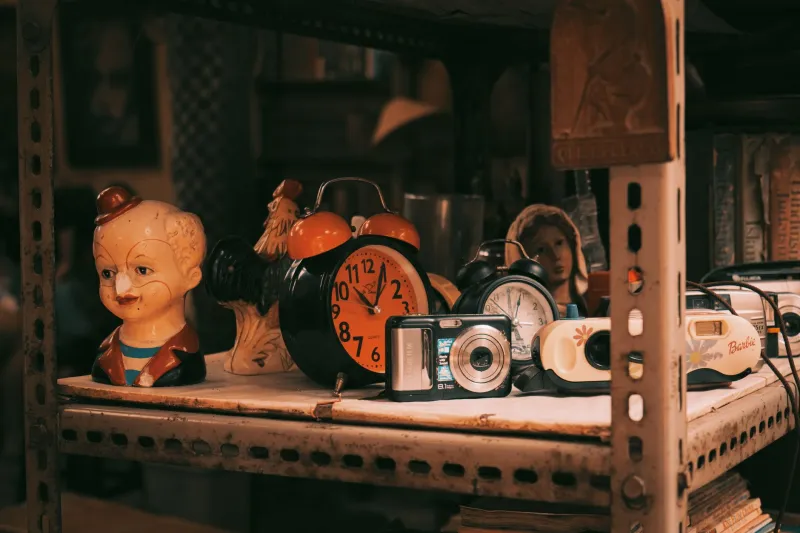
It's probably somewhere in your living room. Or maybe the guest bathroom. Or tucked on a shelf where it technically exists without being the first thing anyone sees.
A candle you'll never burn because the scent is aggressively wrong for you. A decorative bowl that doesn't match anything in your house and never will. A framed print that you'd never in a thousand years pick out for yourself. A sweater in a color that looks terrible on you, folded in a drawer, taking up space, waiting for a day that is never coming.
You didn't choose any of it. But here it is. And here you are, keeping it.
The Object Isn't the Point
The fascinating thing about guilt objects — gifts we keep not because we want them but because we can't bring ourselves to let them go — is that they're almost never really about the thing itself.
The candle isn't a candle. It's your aunt who spent twenty minutes at the boutique trying to pick something you'd like, who got it a little wrong, who handed it to you with that particular hopeful look that you've been carrying around ever since.
The sweater isn't a sweater. It's your mom, who still thinks of you as the person you were at twenty-two, who picked the color she always loved on you back then, who wrapped it carefully and was watching your face when you opened it.
We don't keep bad gifts because we're sentimental about objects. We keep them because throwing them away feels like discarding the intention behind them — and that's a much harder thing to justify.
The Guilt Math
There's a specific calculation that happens when you hold a gift you don't want over the trash can.
You think about how much it probably cost. You think about whether the person who gave it to you might ever come to your home and notice its absence. You think about whether you would notice if a gift you gave someone disappeared from their space — and you probably would, a little, even if you'd never say so.
And then you put it back on the shelf.
This is guilt math, and almost everyone does it without realizing they're doing it. The object becomes a kind of debt you're not sure how to repay, so you just keep it around as evidence that you're a good person who appreciates the people in your life.
The irony is that the person who gave it to you has almost certainly forgotten about it entirely. They've moved on. They're thinking about their own stuff. The object has become entirely your problem now, a small monument to a moment that mattered only to you.
What We're Actually Protecting
Keeping a gift you don't like is, at its core, an act of love — just a slightly confused one.
You're not protecting the object. You're protecting the relationship it represents, or your own sense of yourself as someone who receives things graciously, or the memory of the person who gave it to you, especially if that person is no longer around.
That last one is its own category entirely. Gifts from people who have died become almost impossible to throw away regardless of how ugly or impractical they are, because the object is one of the last remaining physical links to someone who can no longer give you anything new. The bad candle from your grandmother is not a bad candle anymore. It's just her.
Even when the giver is very much alive, the object still carries a version of them inside it. Getting rid of it can feel like a small erasure, a quiet act of ingratitude that you'd never want them to know about even though they almost certainly never would.
The Ones We Display
There's a special tier of guilt object: the ones we actually put out.
These are the items that get placed somewhere visible — not because we love them, but because there's a real chance the gift-giver will visit, and having it out is just easier than explaining its absence. So the weird decorative thing sits on the bookshelf, slightly incongruous among everything else you actually chose, a small performance of appreciation that you're staging for an audience that may never even show up.
And yet — sometimes you stop noticing it's wrong. Sometimes it just becomes part of the room, part of the background of your life, and you realize you've actually gotten used to it. You might even, in some stubborn, affectionate way, started to like it a little. Not for what it is, but for what it represents: the slightly imperfect, genuinely well-meaning effort of someone who wanted to give you something.
Permission You Didn't Ask For
Here's what nobody really says out loud: it is completely fine to donate the candle.
The love that came with it doesn't live inside the wax. The relationship doesn't depend on the object. The gratitude you felt when you received it was real, and it existed in a moment that already happened and cannot be undone by clearing out a drawer.
But also — and this is equally true — you don't have to. You're allowed to keep the ugly bowl forever if it makes you feel connected to someone you love. You're allowed to fold that sweater in your drawer until it disintegrates from old age if that's what feels right.
The guilt object in your home isn't a burden unless you decide it is. Sometimes it's just a small, slightly misshapen piece of evidence that someone was thinking of you. And that's not nothing. That's actually kind of everything.